
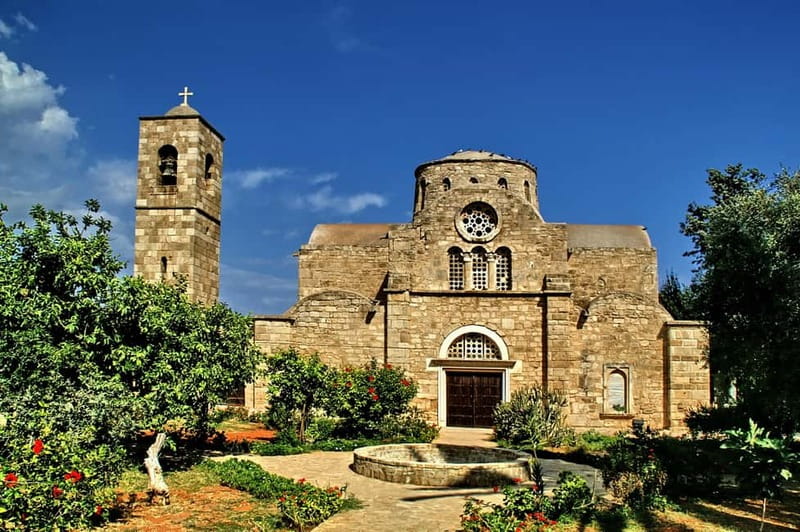
Reviewed · FAMAGUSTA AND SALAMIS DAY TRIPS
Famagusta & Salamis with Italian-speaking Guide
Varosha, the abandoned resort district sealed off after the 1974 conflict, gives this day trip its strongest sense of place. You also visit the ancient ruins of Salamis and the walled center of Famagusta, so the day moves from the Bronze Age to medieval Cyprus and then to the island’s divided present.
I like the way the itinerary links three very different chapters of Cyprus, and I like having hotel pickup and a licensed Italian-speaking guide included. The main caution is guide quality: some departures have had excellent commentary, while others have offered little explanation, making the $76 price harder to justify.
In This Review
- Key points to know before booking
- Why this northern Cyprus day trip is worth considering
- Early pickup and the crossing into northern Cyprus
- Salamis: theater, baths, and the ancient city
- Famagusta’s walls and medieval power
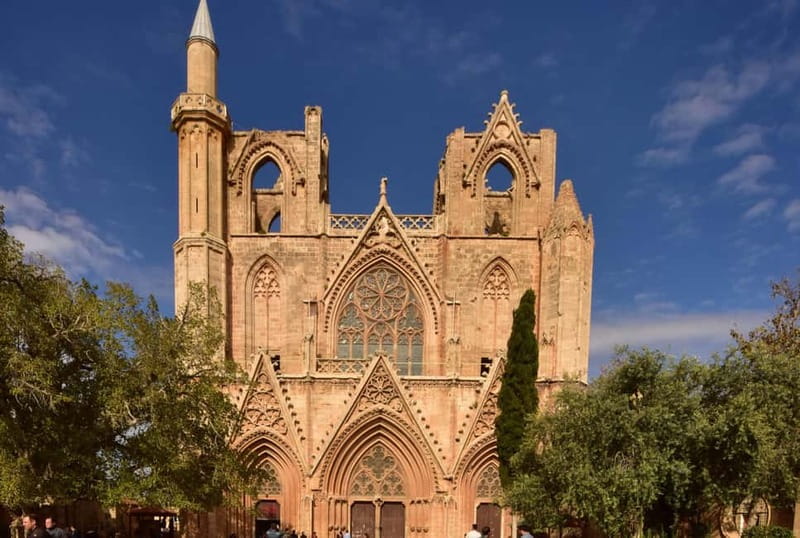
- Lala Mustafa Pasha Mosque and the Lusignan coronations
- Coffee and free time at Famagusta’s golden beach
- Walking through Varosha, the Ghost Town
- Guide quality can change the value
- Is $76 a fair price?
- Who should book this excursion?
- FAQ
- How long does the Famagusta and Salamis tour last?
- Is hotel pickup and drop-off included?
- What language is the tour conducted in?
- Do I need a passport or ID card?
- Are food and drinks included?
- Can I cancel for a full refund?
Key points to know before booking
- Varosha is the emotional centerpiece: Walk through the streets of the former resort, left empty after the 1974 conflict.
- Salamis adds major ancient ruins: See the theater, baths, and gymnasium in a site linked with Teucer and St. Barnabas.
- Famagusta packs in medieval sights: Explore the old town, massive walls, Lala Mustafa Pasha Mosque, and the area around Othello’s Tower.
- The Italian guide matters: Lidia has been praised for strong knowledge of Cyprus, but some departures have received only brief, quiet explanations.
- The border crossing requires care: Carry your passport or ID card, and check that it has at least six months of validity remaining.
- The day includes a beach pause: You get free time for coffee at Famagusta’s golden beach, but food and drinks are not included.
Why this northern Cyprus day trip is worth considering
This is not a single-sight excursion. It is a long, tightly packed history day that takes you across the island’s political border and through three very different settings.
At Salamis, you look back to the ancient world. In Famagusta, you walk among medieval walls and churches. In Varosha, you confront a modern conflict that still shapes Cyprus. That range gives the outing real purpose. You are not simply checking off ruins. You are seeing how one part of the island changed over thousands of years.
The advertised price is $76 per person for eight hours, including pickup, drop-off, transport, and a qualified licensed guide. That can be fair value if the guide gives proper explanations and the full schedule runs as planned. Transport alone is useful here because the route crosses into northern Cyprus and connects places that are awkward to combine independently in one day.
The weak point is consistency. The tour’s overall score is 3.6 out of 5 from 20 ratings, and the difference between the strongest and weakest experiences is large. Some departures have included an excellent guide, while others have had almost no useful commentary. If interpretation is central to your decision, confirm that the Italian-language departure is operating as advertised.
More famagusta and salamis day trips in Larnaca:
- Famagusta & Salamis with a Polish-speaking Guide
★ 4.7 · 95 reviews - Famagusta Jeep Tour and Blue Lagoon Lunch Cruise from Larnaca
★ 4.5 · 52 reviews - Full Day Tour in Famagusta: The Ghost City
★ 5.0 · 11 reviews
Early pickup and the crossing into northern Cyprus
The morning starts early. Pickup begins at Finikoudes bus stop in Larnaca at 7:10 a.m. Ayia Napa pickups run from 7:45 to 8:00 a.m., and Protaras pickups from 8:10 to 8:30 a.m.
You are collected by an excursion coach with a sign. Be at the meeting point at least five minutes early. The exact time and pickup information are sent by email one to two days before departure, so check your spam folder as well as your main inbox.
The route then heads toward the northern part of the island and passes through border control. This is the practical detail that can make or break the morning. You must carry your passport or ID card, and the document should have at least six months left before expiration. A nearly expired passport could mean denied boarding or entry.
Keep the document easy to reach rather than buried in your luggage. Border procedures can add waiting time, so the eight-hour schedule should be viewed as a full day, not a relaxed half-day outing.
The tour is listed with a live Italian-speaking guide. That is important because the sites are much more rewarding when you understand the political and religious changes behind them. At its best, the guide explains the shift from ancient Greek culture to Roman rule, medieval Lusignan power, Ottoman control, and the modern division of Cyprus.
At its weakest, the guide may simply announce meeting times and offer only a few seconds of commentary. One Italian-language departure was criticized for explanations delivered too briefly and too quietly. That is not a small issue at Salamis or Famagusta, where a pile of stones or a converted church needs context.
Salamis: theater, baths, and the ancient city
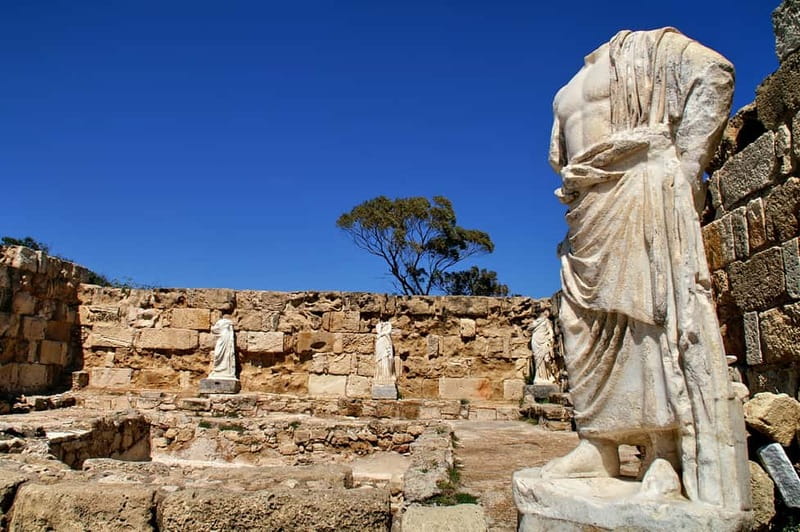
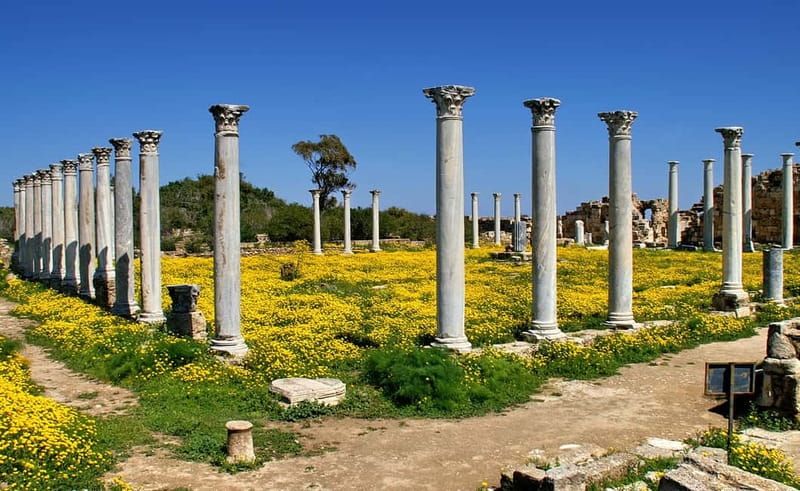
Salamis is the first major stop and one of the most important archaeological sites in northern Cyprus. The city is traditionally linked with Teucer, who was said to have founded it in 1180 BC after returning from the Trojan War.
That origin story gives the site a heroic beginning, but the ruins you see reflect later periods as well. The planned visit includes the theater, the spa, and the gymnasium. Together, these remains show how public life worked in a major ancient city.
The theater is the easiest place to picture Salamis as a living community. It was built for crowds, performance, and civic life, not simply for decoration. The spa and gymnasium point to the Roman world’s taste for exercise, bathing, and public gathering. I find this combination more useful than seeing isolated columns because it helps you imagine how the city functioned.
Salamis also has an important Christian connection. St. Barnabas, who accompanied St. Paul on his journey through Cyprus, was born and killed here according to the tour’s historical account. That link adds another layer to the site, especially for visitors interested in early Christianity.
Do not expect a small, polished museum-style attraction. This is an open archaeological site, and the quality of your visit depends heavily on the guide’s explanations. Without clear commentary, the theater, baths, and gymnasium can blur into a long sequence of ancient remains. With a strong Italian-speaking guide, the stop can set up the whole day by showing you how Cyprus moved from legend to urban civilization and then to Christianity.
The schedule also matters. Salamis is one of the places specifically promised on this itinerary, but a substitute or shortened tour may omit it. If the ancient ruins are your main reason for booking, confirm the exact Italian-language program before you leave.
Famagusta’s walls and medieval power
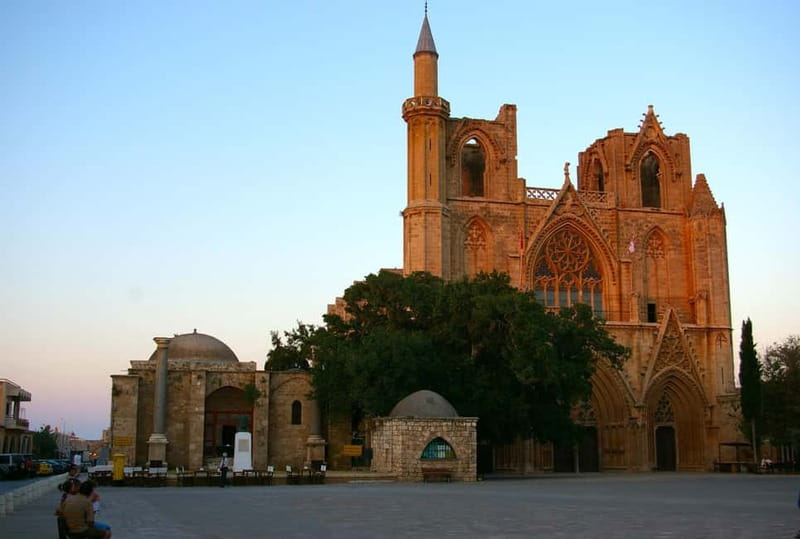
After Salamis, the tour continues to Famagusta, the medieval city protected by thick defensive walls. These walls are not background scenery. They explain the city’s importance and its need to defend itself from repeated attacks.
Inside the old town, you walk through narrow streets and see historic buildings from the outside. The plan includes the citadel and the tower associated with Othello. The setting has a strong medieval feel, but the visit is primarily an outdoor walk rather than a sequence of long interior tours.
The scale of Famagusta’s fortifications helps you understand the city’s former wealth and strategic value. A port city with powerful walls was a prize. The stone defenses also make the modern quietness of parts of the old town feel striking. The city’s past is grander than its present-day pace suggests.
For me, this is where a guide’s storytelling matters most. A wall can look like a wall. A tower can look like a tower. The right explanation connects them to the Lusignan rulers, the Kingdom of Cyprus, and the wider struggle for control of the eastern Mediterranean.
You should also allow for a slightly uneven walking experience. The streets are narrow, and much of the sightseeing is on foot. Comfortable shoes are sensible, though the tour information does not provide a formal accessibility description. The itinerary does not promise extensive interior access, so do not book it expecting a museum-heavy city tour.
A few more Larnaca trips to weigh up
- From Larnaca: Cape Greko Guided Tour with Transfers
★ 5.0 · 261 reviews - Half-Day Odyssey Guided Boat Safari with Lunch in Cyprus
★ 4.5 · 8 reviews - Authentic Cyprus with an Romanian-speaking Guide
★ 4.7 · 8 reviews - 30-Minute Guided Honey Tasting Activity in Melini
★ 5.0 · 7 reviews
Lala Mustafa Pasha Mosque and the Lusignan coronations
One of Famagusta’s most memorable buildings is the former Cathedral of St. Nicholas, now the Lala Mustafa Pasha Mosque. The change from cathedral to mosque is not a minor detail. It reflects the succession of powers and faiths that shaped Cyprus.
During the Lusignan period, the cathedral hosted coronations for rulers of Cyprus and Jerusalem. That gives the building an unusual royal connection. You are looking at a place tied to ceremonies of power, not simply a pretty old church.
The building’s present identity also makes it a useful stop for understanding Cyprus as a crossroads. Medieval Latin Christianity, later Ottoman rule, and the island’s divided modern politics all meet in the same structure.
The visit is listed as part of the guided tour, but the amount of explanation may vary. One of the clearest criticisms of weaker departures was the lack of information inside or around St. Nicholas and the old town. If the guide is speaking softly or rushing, stay close and ask direct questions when possible.
You should also dress and behave respectfully because the building functions as a mosque. The supplied information does not specify a dress code, so it is wise to choose modest clothing and follow any instructions given locally.
Coffee and free time at Famagusta’s golden beach
The excursion includes free time for coffee at Famagusta’s golden beach. This pause breaks up the ruins and old-town walking, giving you a chance to sit down and reset before the final stop.
Food and drinks are not included, so bring money for your own coffee or snack. The schedule does not specify a particular café, meal, or length of break. Think of it as independent time rather than a hosted dining stop.
This is also a useful moment to judge the day’s pace. Salamis and Famagusta are information-heavy places. A short beach break can keep the outing from feeling like one long lecture and one long walk.
Do not mistake the stop for a full beach day. The main purpose of the trip is cultural sightseeing, and the beach time is a brief part of the eight-hour route. If you want long hours by the sea, choose a dedicated beach excursion instead.
Walking through Varosha, the Ghost Town
The final visit is Varosha, also known as the Ghost Town. Once a resort district, it was abandoned after the 1974 conflict and became a powerful symbol of Cyprus’s division.
Walking through its streets is different from visiting ancient ruins. At Salamis, the passage of centuries has reduced buildings to archaeology. In Varosha, the modern world feels interrupted. The empty streets and abandoned resort setting point to a political crisis that remains part of Cyprus today.
The tour describes this as a walk through the streets rather than an interior exploration. Keep your expectations specific. You are there to see the district and understand its recent past, not to wander freely through every abandoned building.
This stop can be emotionally heavier than the earlier sights. It is also the place where the day’s timeline comes together most clearly. You have seen ancient settlement, medieval defense, religious change, and then a modern division that still affects movement across the island.
A good guide should explain the background with care and avoid turning Varosha into a simple curiosity. Since the quality of commentary has varied, this is another reason to stay near the guide and listen closely. If the guide is Lidia, the available information describes her as strong on Cyprus’s history, geography, and culture, and as someone who kept the day engaging.
Guide quality can change the value
This tour is sold around an Italian-speaking guide, so language service is not an optional extra. It is central to the experience.
The most positive account describes Lidia as well prepared in Cyprus’s history, geography, and culture, with an excellent driver and well-organized logistics. That is the standard you want. A good guide turns a demanding route into a connected story and helps you understand why each stop matters.
But you should know the risk before paying. Some Italian-language departures have been criticized for very short explanations delivered in a low voice. In one especially disappointing substitute outing, Salamis was missed altogether, and there was little or no explanation at St. Nicholas and in Famagusta’s old town.
There have also been cases where a replacement English-language tour was offered after the Italian tour could not be provided at short notice. If the operator contacts you about a language change, ask exactly which stops remain, how long the tour will last, and what refund terms apply before accepting.
The transport side appears to be more dependable than the guiding side. Pickup and drop-off are included, and strong accounts describe the logistics and driving as well organized. Still, an early return or a shortened route can reduce the value considerably, especially when the advertised day is eight hours.
Is $76 a fair price?
At $76, this is a reasonable price only if you receive the complete route and meaningful guiding.
The cost covers transport across the island, border-crossing logistics, hotel pickup and drop-off, and a licensed guide. Those services have real value. Planning Salamis, Famagusta, and Varosha independently would require careful transport arrangements and a clear understanding of crossing requirements.
The price feels high if you mainly receive a ride between sites and a few brief meeting instructions. You can see important places without a guide, but the whole point of this outing is the explanation connecting them. A weak guide turns the experience into expensive transport.
The tour offers free cancellation up to 24 hours before departure and allows you to reserve now and pay later. Those terms reduce booking risk, but they do not solve the language-quality question. Confirm the Italian departure and keep all operator messages.
Who should book this excursion?
I would choose this trip if you want one efficient day covering ancient ruins, medieval architecture, and modern Cypriot politics. It suits you especially well if you are staying in Larnaca, Ayia Napa, or Protaras and do not want to arrange a northern Cyprus visit on your own.
It is also a good match for Italian speakers who care about historical context and are willing to stay close to the guide. The best version of this day is varied, thoughtful, and full of contrasts.
I would hesitate if you dislike early starts, border procedures, long coach transfers, or walking through old streets. I would also be cautious if your main goal is a relaxed beach outing or extensive access to building interiors.
Before booking, confirm three things: that the tour will be conducted in Italian, that Salamis is included, and that the full eight-hour schedule is operating. Those checks matter more here than the cancellation policy.
FAQ
How long does the Famagusta and Salamis tour last?
The excursion lasts eight hours. Pickup times vary by departure point, beginning at 7:10 a.m. from the Finikoudes bus stop, 7:45 to 8:00 a.m. from Ayia Napa, and 8:10 to 8:30 a.m. from Protaras.
Is hotel pickup and drop-off included?
Yes. Pickup and drop-off are included, and you are collected by an excursion coach with a sign. Exact details are sent by email one to two days before the excursion.
What language is the tour conducted in?
The advertised live tour guide speaks Italian. If the operator offers a replacement in another language, confirm which sights and services remain before accepting the change.
Do I need a passport or ID card?
Yes. You must carry your passport or ID card for the border crossing and entry into northern Cyprus. A passport with less than six months until expiration could lead to denied boarding or entry.
Are food and drinks included?
No. Food and drinks are not included. The tour provides free time for coffee at Famagusta’s golden beach, but you pay for your own refreshments.
Can I cancel for a full refund?
You can cancel up to 24 hours before the excursion for a full refund. The tour also offers a reserve-now, pay-later option.
Just added around Larnaca
- Walk around Pano Lefkara village and Lefkara lake★ 4.9 · 5 reviews
- Full-Day Tour UNESCO Churches and Kalopanayiotis in Cyprus★ 4.5 · 8 reviews
- mountain Christmas villages tour★ 4.5 · 5 reviews
- 3 Wreck Dive Day in Zenobia and Elpida★ 4.5 · 14 reviews
- Troodos Mountains 4×4 Tour with Meze Lunch from Larnaca★ 4.5 · 15 reviews
- Private Transfer from Larnaca Airport to Paralimni up to 4(pax) in 4 seater Taxi★ 3.5 · 3 reviews
- Taxi transfer from LCA airport to Ayia Napa or Ayia Napa to LCA airport★ 5.0 · 3 reviews
- 30-Minute Guided Honey Tasting Activity in Melini★ 5.0 · 7 reviews
Famagusta and Salamis Day Trips, compared.
Famagusta, Blue Lagoon and Turtle Cove Boat Trip
Read our review →
Ghost-Town Famagusta Mini Bus Tour from Protaras and Ayia Napa
Read our review →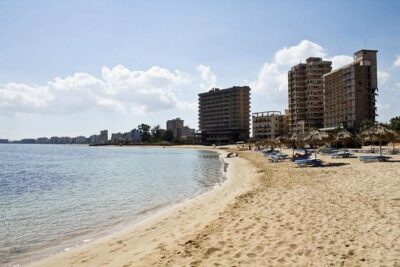
Full-day Famagusta: Lost Cities & Coastal Secrets from Paphos
Read our review →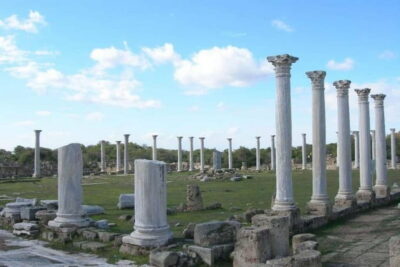
Choirokitia & Famagusta Guided Tour with Transfers
Read our review →
From Aya Napa/Protaras: Varosha Ghost Town Tour on a Red Bus
Read our review →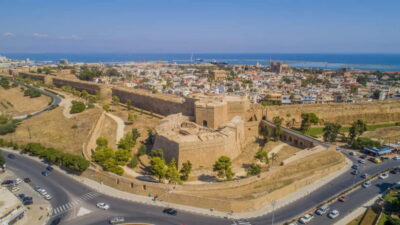
Famagusta & Salamis with a Polish-speaking Guide
Read our review →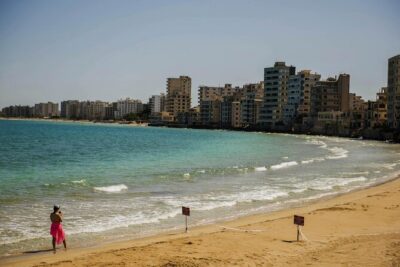
Red Bus Varosha experience in English from Ayia Napa, Protaras
Read our review →Browse the lists this tour appears in