
Reviewed · FAMAGUSTA AND SALAMIS DAY TRIPS
A Day Trip to Medieval FAMAGUSTA (Kyrenia, Nicosia or Famagusta )
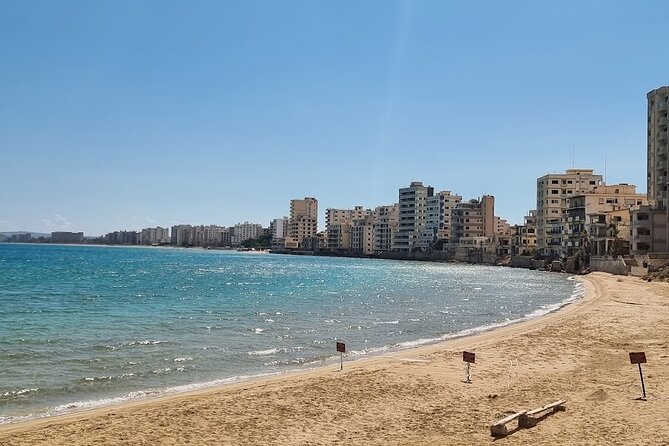
Famagusta gives you several layers of Cyprus in one day: a saint’s tomb, a sprawling ancient city, Gothic church architecture, Ottoman-era stories, and the eerie abandoned quarter of Varosha. The most memorable stop is likely Ghost Town Famagusta, where hotels and homes were left empty after 1974 and the area reopened after 46 years.
I like the private format, which lets your guide adjust the pace and explain details without a large group slowing you down. I also like that entry tickets, bottled water, fuel, and hotel transport are covered. The main drawback is the long day and the firm cancellation policy, so book only when your plans are settled.
In This Review
- Key points to know before booking
- Why Famagusta makes a strong day trip
- St. Barnabas Monastery and the saint’s hidden tomb
- Salamis, where myth meets Roman remains
- Walking through Famagusta’s medieval walls
- Lala Mustafa Pasha Mosque and a Gothic cathedral’s second life
- Namık Kemal’s prison inside the Venetian palace
- Varosha, the abandoned quarter of Famagusta
- The guide can shape the day
- What the $360.07 group price really means
- Timing, walking, and practical preparation
- Who should book this Famagusta day trip?
- Should you book it?
- FAQ
- How long does the Famagusta day trip last?
- Where can pickup be arranged?
- What time does the tour begin?
- Is this a private tour?
- Is the tour offered in English?
- Are admission tickets included?
- Is lunch included?
- How much does the tour cost?
- Can I cancel or change the booking?
Key points to know before booking
- Six substantial stops: Visit St. Barnabas Monastery, Salamis, the walled city, Lala Mustafa Pasha Mosque, Namık Kemal Museum, and Varosha.
- Private guide Sirin: Her explanations of Cyprus history and Varosha are a major part of the experience.
- Seven hours on the road: Pickup starts between 9:30 and 10:00 a.m., with the day ending back at your meeting point.
- Good value for four people: The price is $360.07 per group of up to four, not per person.
- Lunch costs extra: A local restaurant can be included in the day, but your meal is not covered.
- Moderate walking required: Expect time on foot at ancient ruins and in Famagusta’s old town.
Why Famagusta makes a strong day trip
Famagusta is not just another old town with a church and a few crumbling walls. It brings together Greek mythology, early Christianity, medieval royal power, Venetian defenses, Ottoman rule, and the modern story of Varosha.
That variety is the real reason to choose this outing. You do not spend seven hours looking at similar ruins. Instead, each stop changes the subject. At St. Barnabas, the focus is faith and local tradition. At Salamis, it is ancient city life. Inside Famagusta, you move into Gothic architecture, imprisonment, and the unresolved feel of an abandoned resort district.
The private vehicle matters here. The tour begins from Kyrenia, Nicosia, or Famagusta, and the drive to the northeast of Cyprus is handled for you. A driver-guide also means you can ask questions as the day unfolds instead of waiting for a scheduled group explanation.
Pickup is offered from centrally located hotels in Kyrenia, with selected hotel pickup and drop-off also listed for Kyrenia or Famagusta. If you are staying in another city, an additional transport charge may apply, so confirm that point before paying.
More famagusta and salamis day trips in Cyprus:
- Ayia Napa/Protaras/Larnaka: Famagusta and Salamis Day Trip
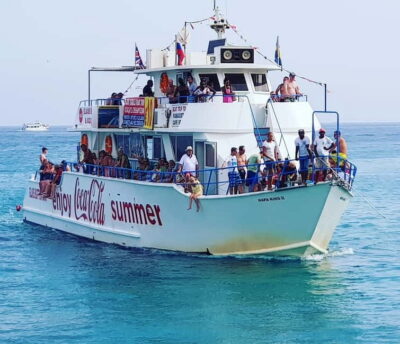
★ 4.7 · 559 reviews - Protaras: Famagusta, Blue Lagoon and Turtle Cove Boat Trip
★ 4.6 · 428 reviews - Ghost-Town Famagusta Mini Bus Tour from Protaras and Ayia Napa
★ 4.5 · 298 reviews
St. Barnabas Monastery and the saint’s hidden tomb
The first stop receives about two hours, making it the longest visit of the day. That is useful because St. Barnabas is more than a quick photo stop.
Barnabas was Jewish and went to Jerusalem for higher studies. After accepting Christianity, he returned to Cyprus and began spreading the faith. According to the story explained here, opponents killed him, and believers buried him in a cave beneath a carob tree. They were later chased toward Egypt, leaving the location of the tomb unknown for decades.
Your guide explains how the tomb was eventually found before you visit it yourself. The stop includes the Icon Museum, as well as the saint’s tomb, so you get both a religious site and a look at the artistic side of Orthodox worship.
I would give this part your full attention even if you are not especially interested in religious history. The tomb story is unusually personal and specific, and a private guide can explain the local meaning without rushing you from room to room.
The two-hour allocation also gives you time to look carefully. Still, this is a monastery and museum, not an entertainment attraction. If you prefer ruins and open-air sites, Salamis will probably be more immediately exciting.
Salamis, where myth meets Roman remains
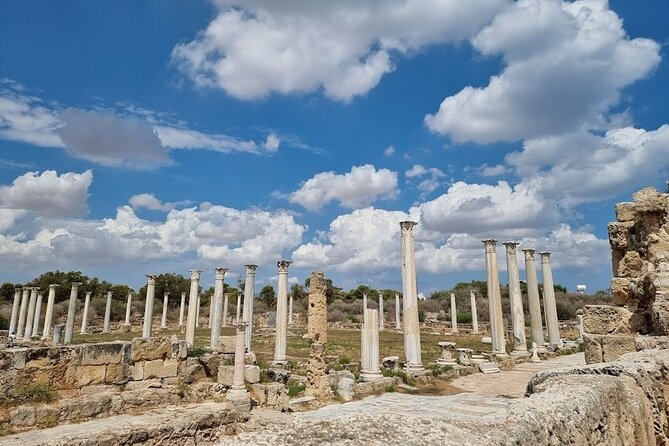
From St. Barnabas, the day continues to Salamis for about an hour. The site’s mythical foundation reaches back to the story of Teucer, a Trojan War hero who was exiled from the Greek island of Salamis after failing to protect his half-brother Ajax. He sailed to Cyprus and named his new kingdom Salamis.
The remains you see are less about one perfect monument and more about the scale and range of an ancient city. Your guide points out the gymnasium, theatre, and Roman baths, giving you a sense of public life, exercise, entertainment, and bathing customs.
The one-hour visit is enough for the named highlights, but it is not an exhaustive archaeological tour. Wear practical shoes and expect uneven ground. The tour calls for a moderate level of physical fitness, and this is one of the reasons why.
Salamis is a good counterpoint to St. Barnabas. The monastery asks you to listen to a story passed down through faith. Salamis asks you to picture a city through its surviving stonework. Having both in the same morning makes the day feel varied rather than repetitive.
Walking through Famagusta’s medieval walls
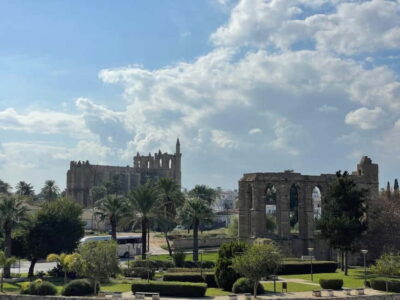
The next stage is a one-hour walking tour through Famagusta’s walled old city. Lusignans built the city walls, and the Venetians later added to them. That mixture is important because the old town is not tied to one ruling power or one architectural style.
As you walk, your guide connects the surviving buildings to the many communities and rulers that passed through Cyprus. The old town is best understood on foot, where you can see how the walls, streets, churches, and civic buildings fit together.
The tour does not charge a separate admission fee for the walled-city walk. You should still expect plenty of time standing and walking, with some surfaces that may be uneven. The private setting is especially helpful here because you can pause for questions or spend more time on a detail that catches your eye.
This part is also where the day starts to feel less like an archaeological visit and more like a living city walk. The history is in the buildings, but the guide’s explanation helps you connect the pieces.
More nicosia and kyrenia day trips in Cyprus:
- Kyrenia Tour (only from Nicosia/Kyrenia Hotels)
★ 5.0 · 22 reviews - Paphos: Kyrenia, St. Hilarion Castle & Bellapais Abbey Tour
★ 4.6 · 18 reviews - FROM LARNACA/AYIA NAPA/PROTARAS: Kyrenia & Famagusta
★ 4.6 · 16 reviews - From Ayia Napa: Tales of Two Cities Nicosia & Kyrenia-Polish
★ 3.7 · 16 reviews
Lala Mustafa Pasha Mosque and a Gothic cathedral’s second life
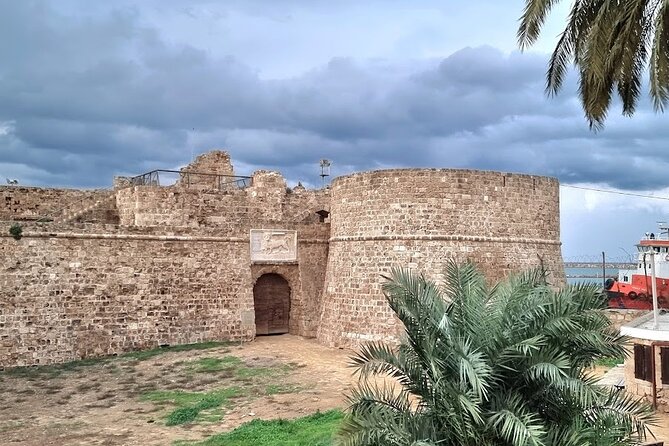
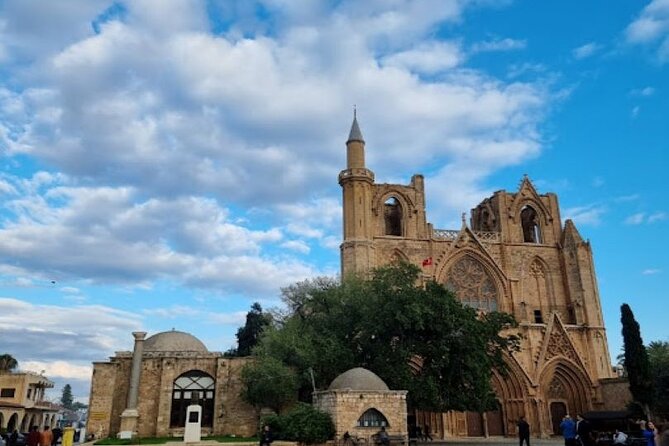
Lala Mustafa Pasha Mosque is one of the day’s strongest architectural stops. The building began as St. Nicholas Cathedral between 1298 and 1312, under Lusignan rule. It was built in the Gothic style and was used for the coronation of kings of Jerusalem for many years.
After the Ottomans took control of Cyprus, they added a minaret and converted the cathedral into a mosque. It remains in use as a mosque today, and the site was once called Ayasofya before taking the name Lala Mustafa Pasha Mosque.
That change of use is the point to watch for. You are not simply looking at a beautiful Gothic building. You are seeing how a structure can be adapted by a new government and religious community while retaining much of its earlier form.
A Ficus sycomorus tree beside the building is said to date to 1299. The detail gives the visit a pleasing sense of time, especially when you place the tree beside the cathedral’s medieval stonework.
The visit lasts about an hour. Dress and behave respectfully because the building is still used for worship. Admission is included at no extra cost, but the tour does not promise that every interior area will be open at all times.
Namık Kemal’s prison inside the Venetian palace
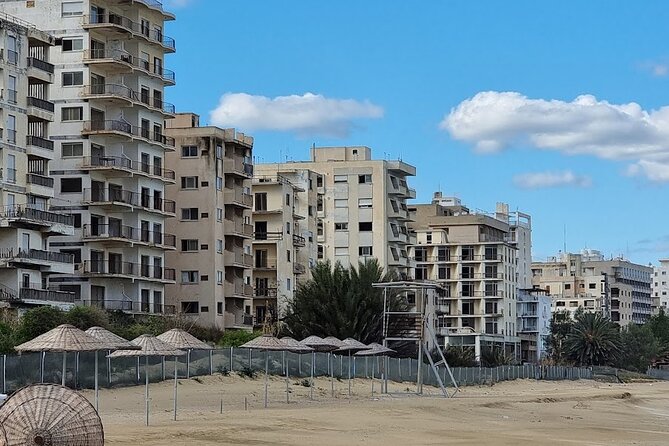
Famagusta’s story shifts again at the Namık Kemal Dungeon and Museum. During Ottoman rule, the city was used as a place of exile. Namık Kemal, a writer who opposed the Sultan, was imprisoned here for 38 months.
His prison is located within the Venetian palace, and a statue of him faces the square named after him. The statue was replaced in 1953. Your guide, Sirin, explains more about his life and books, giving this stop a literary angle that you might not expect in a medieval city tour.
This is a compact visit, but it adds human scale to the larger political story. Fortifications and cathedrals can make history feel distant. A prison cell and one person’s forced stay make it easier to understand how Famagusta was used by rulers beyond its role as a trading and religious center.
The museum is listed as free entry. Since this is a walking stop, it works best if you listen closely to the guide rather than expecting a large collection of objects.
Varosha, the abandoned quarter of Famagusta
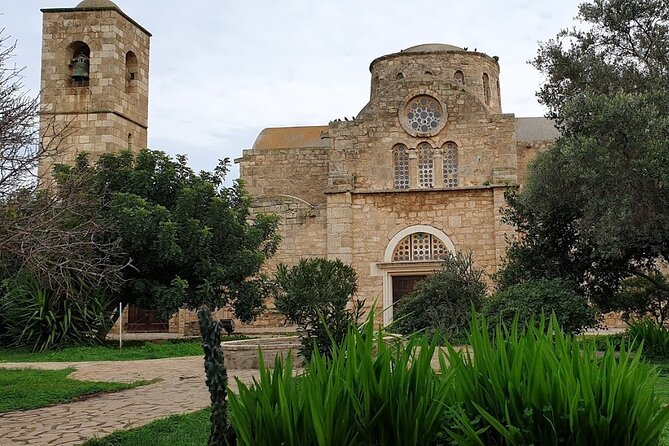
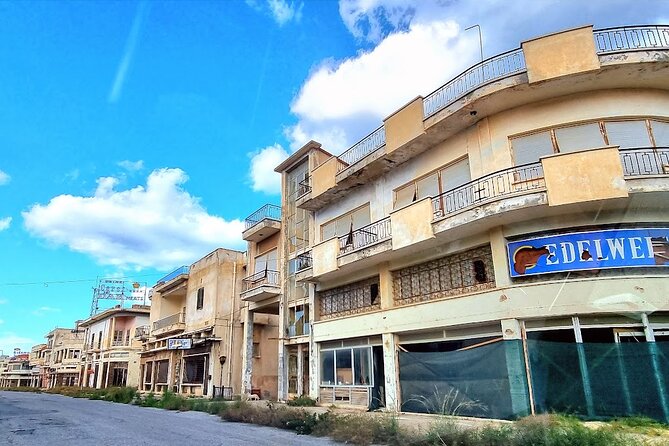
Varosha is the emotional high point for many people on this tour. It was once filled with homes, hotels, tourists, and ordinary daily activity. The area was abandoned in 1974 and reopened after 46 years.
You walk through part of the area with your guide, who explains what happened and how the district changed. The unusual power of the stop comes from the contrast between its former role as a resort and its long period of emptiness. This is not a restored old quarter prepared for sightseeing. Its condition is the story.
Allow yourself time to absorb the place. The tour gives Varosha about an hour, which is enough to walk and listen, though the experience may feel more sobering than the earlier stops.
Sirin’s explanations are particularly useful here. She has been praised for making the history of the ghost town clear while also keeping the day engaging. Her approach appears to mix serious context with a relaxed manner, which matters when a stop carries such a heavy subject.
The guide can shape the day
This is a private activity for your group only, with a driver-guide rather than a separate large coach tour. The guide is listed as English-speaking, and Sirin is the name connected with the most detailed praise for the experience.
Her role goes beyond pointing out buildings. She explains the life of Barnabas, the myth behind Salamis, the change from cathedral to mosque, Namık Kemal’s exile, and the story of Varosha. You can also ask for clarification as you go, something that is harder to do in a crowded group.
One useful detail is that a local restaurant lunch may be worked into the day. The meal is not included, and the exact restaurant is not specified, so budget separately and treat the stop as a practical break rather than a guaranteed food experience.
What the $360.07 group price really means
The listed price is $360.07 for up to four people. Split four ways, that is about $90 per person. For two people, it works out to about $180 each, so the value depends heavily on your group size.
For four people, this is a sensible way to cover a full day of private transport, guide service, bottled water, fuel surcharge, and historical-site tickets. You also avoid arranging separate taxis or trying to coordinate several distant sights on your own.
For a couple, the price is less of a bargain, but you are paying for privacy and convenience. You can explore at your own pace, start with hotel pickup, and return to the same meeting point without piecing together transport.
Lunch is the main extra cost named by the operator. The tour also notes that pickup from cities outside the listed central areas may cost more. Ask for the total transport price before booking if you are not staying in Kyrenia or Famagusta.
The activity is often booked about 35 days ahead. That suggests planning early, especially if you want a particular date or guide, though no fixed availability promise is given.
Timing, walking, and practical preparation
The operating window lists Monday through Sunday, with pickup between 9:30 and 10:00 a.m. The full outing lasts about seven hours and ends back at the meeting point.
You should plan for a mix of vehicle time, outdoor ruins, museum interiors, religious buildings, and city walking. A moderate fitness level is advised. Comfortable shoes are more important than smart clothing, and bottled water is supplied.
Because the day includes a functioning mosque, bring a respectful attitude toward religious spaces. The supplied information does not specify clothing rules, photography rules, or restroom locations, so ask your guide at the start if any of those details matter to you.
The experience is offered in English and comes with a mobile ticket. Confirmation is received when you book. The cancellation policy is strict: the booking is non-refundable and cannot be changed for any reason, so avoid reserving it until your date and pickup details are certain.
Who should book this Famagusta day trip?
I would choose this tour if you want the main historical sights of northeastern Cyprus in one organized day, especially if you are staying in Kyrenia and do not want to arrange a car or several separate visits.
It suits couples, families, and small groups of up to four who value a private guide. It is also a good fit if Varosha is high on your list, since the abandoned quarter receives a full hour rather than being treated as a quick drive-by.
You may want a different plan if you prefer a slow archaeological day focused only on Salamis, or if seven hours of transport and walking sounds tiring. Salamis receives about an hour, and Famagusta’s main sights are covered in a compact route. This is a broad introduction, not a specialist study of one site.
Should you book it?
Book it if you want variety, private transport, and strong storytelling in a single day. The best value comes when four people share the $360.07 price, and the combination of St. Barnabas, Salamis, Famagusta, and Varosha is hard to reproduce as easily without a guide.
Think twice if you are booking for only one or two people and are focused on low cost. Also skip it if you need flexible cancellation, since the booking cannot be refunded or amended.
For most small groups based in Kyrenia, this is a well-planned way to meet the medieval city, ancient Salamis, and the modern sadness of Varosha without wasting the day on transport arrangements.
FAQ
How long does the Famagusta day trip last?
The tour lasts approximately seven hours, including hotel pickup, transportation, guided visits, and the return transfer.
Where can pickup be arranged?
Pickup is offered from centrally located hotels in Kyrenia. Selected hotels in Kyrenia or Famagusta are also included in the pickup details. Pickup from other cities may require an extra charge.
What time does the tour begin?
The listed operating hours show pickup between 9:30 and 10:00 a.m., Monday through Sunday.
Is this a private tour?
Yes. Only your group participates, with a maximum of four people.
Is the tour offered in English?
Yes. The experience is offered in English.
Are admission tickets included?
Yes. Tickets for the historical sites listed on the tour are included, including St. Barnabas Monastery and Salamis.
Is lunch included?
No. Lunch is not included in the price. A local restaurant stop may be arranged during the day, but you pay for your meal separately.
How much does the tour cost?
The price is $360.07 per group of up to four people.
Can I cancel or change the booking?
No. The experience is non-refundable and cannot be changed for any reason after booking.
More 1-Day Tours in Cyprus
- From Paphos: Blue Lagoon and Baths of Aphrodite Day Trip
★ 4.7 · 1,730 reviews - From Paphos: Troodos Mountains & Villages Guided Day Trip
★ 4.7 · 1,531 reviews - Paphos: Blue Lagoon, Aphrodite’s Baths & Sea Caves Day Trip
★ 4.5 · 654 reviews - From Ayia Napa/Protaras/Larnaca: Paphos and Kourion Day Trip
★ 4.5 · 506 reviews
Just added around Cyprus
- Wave Dancer Deluxe Night cruise with Fireworks (Adults Only)★ 4.8 · 17 reviews
- From Ayia Napa & Protaras: Kourion Tour and Paphos Town★ 4.2 · 24 reviews
- Walk around Pano Lefkara village and Lefkara lake★ 4.9 · 5 reviews
- Troodos Mountains -Free Wine Tasting- Max 7p Group -Full A/C★ 4.9 · 6 reviews
- Troodos Mountains : private tour including a wine tasting★ 4.9 · 11 reviews
- Troodos Villages and Kykkos Monastery from Paphos in Polish★ 4.6 · 15 reviews
- Transfers: Paphos to Latchi, BBQ & Waterslide Cruise★ 4.9 · 23 reviews
- Protaras: Harmony | Luxury boat, water slide, Value Adventure★ 4.5 · 12 reviews
Famagusta and Salamis Day Trips, compared.
Famagusta, Blue Lagoon and Turtle Cove Boat Trip
Read our review →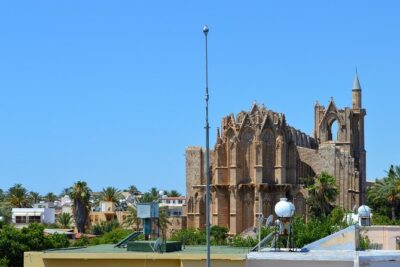
Ghost-Town Famagusta Mini Bus Tour from Protaras and Ayia Napa
Read our review →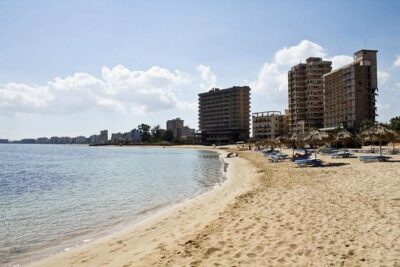
Full-day Famagusta: Lost Cities & Coastal Secrets from Paphos
Read our review →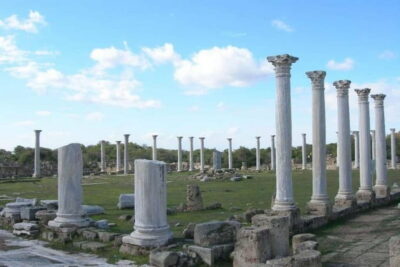
Choirokitia & Famagusta Guided Tour with Transfers
Read our review →
From Aya Napa/Protaras: Varosha Ghost Town Tour on a Red Bus
Read our review →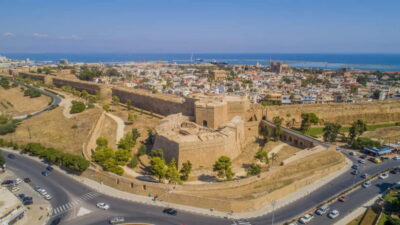
Famagusta & Salamis with a Polish-speaking Guide
Read our review →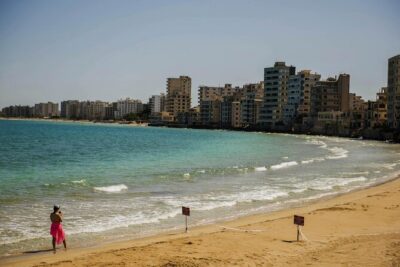
Red Bus Varosha experience in English from Ayia Napa, Protaras
Read our review →Browse the lists this tour appears in